Athenian statesman and Peripatetic scholar (c. 350–280 BCE). A student of Theophrastus, he governed Athens for a decade from 317 to 307 under Macedonian backing, and after his fall took refuge in Egypt as an adviser to Ptolemy I. The Letter of Aristeas credits him with proposing the Library of Alexandria and its policy of collecting the books of the world—but that text was composed a century or two after his death with evident apologetic purpose, and his role has remained doubtful.
He was charged to collect, if possible, all the books in the world.
—— The Letter of Aristeas (c. 2nd c. BCE; late and apologetic)
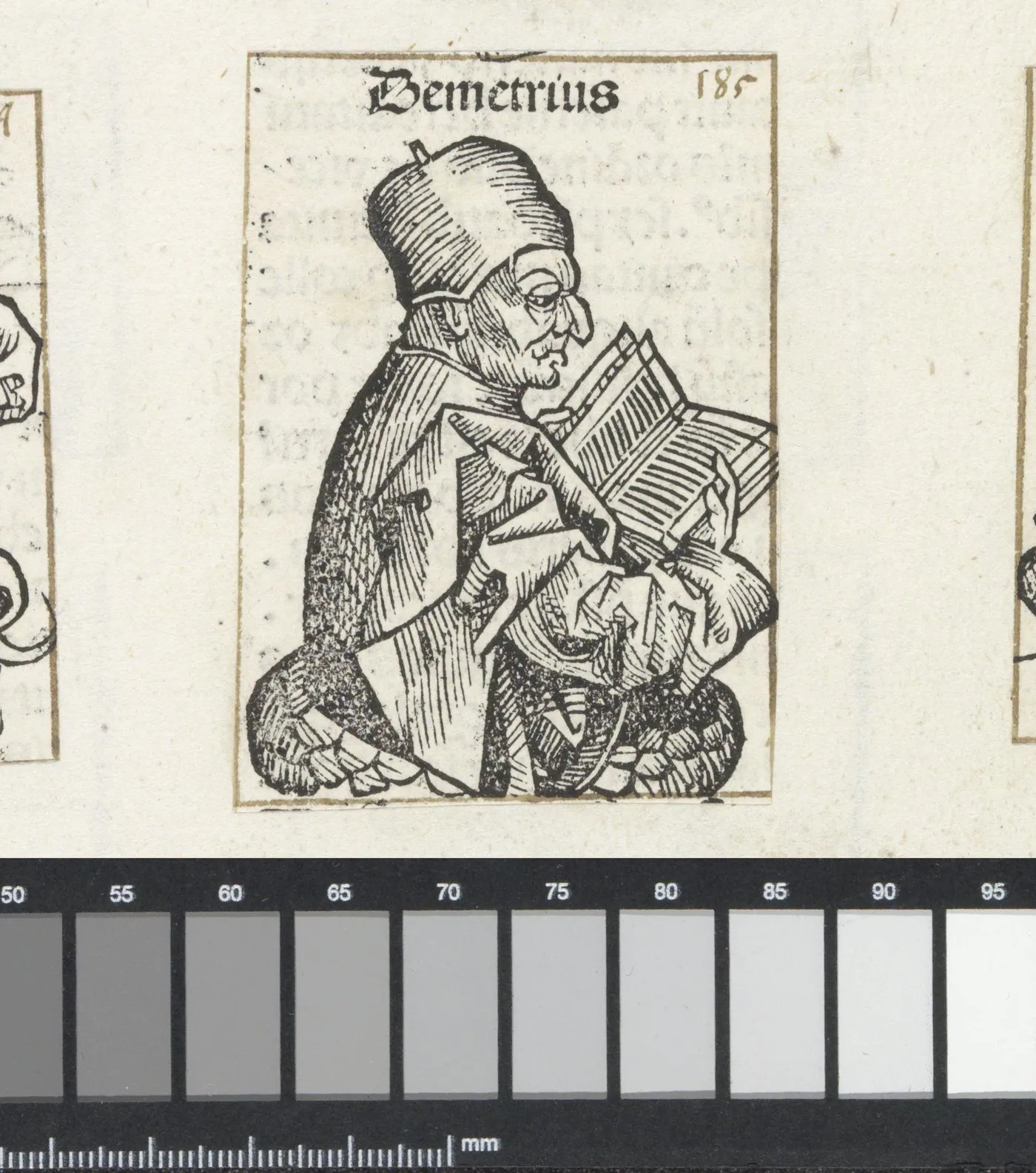
History
Demetrius came from the deme of Phalerum and studied under Theophrastus, Aristotle's successor, in the Peripatetic school. In 317 BCE Cassander of Macedon installed him over Athens, and for ten years he conducted censuses, curbed extravagant funerals, and revised the laws, to mixed report; when Demetrius Poliorcetes took the city in 307 he fled, making his way in time to Egypt. Ptolemy I gathered scholars at Alexandria and founded the Museum and Library, and Demetrius is said to have taken part. The principal source for this is the Letter of Aristeas—an account of the origins of the Septuagint, composed around the second century BCE, a century or more after his death, and designed to establish the authority of the Greek Bible, with an embroidered narrative throughout. Modern scholarship therefore rates his role as possible participation of uncertain extent. Later biographical tradition adds that after Ptolemy I's death he lost favour for having backed a different successor, and died of a snakebite in exile; these anecdotes likewise come from late material.
Connections
Consequences1
- The Library of Alexandriacontributed · disputedAccording to the late Letter of Aristeas he advised on collecting books; his role is doubtful
Sources
- William W. Fortenbaugh & Eckart Schütrumpf (eds.), Demetrius of Phalerum: Text, Translation and Discussion
- Roy MacLeod (ed.), The Library of Alexandria: Centre of Learning in the Ancient World
- Demetrius of Phalerum
Open questionscontested
- His connection with the Library of Alexandria rests entirely on late sources in the tradition of the Letter of Aristeas, and modern historians are largely sceptical.
- His dates of birth and death are approximate.
- The story that he fell from favour for backing the wrong heir to the throne and died of a snakebite comes from anecdotes in late biographies and cannot be fully trusted.
- The evidence about him is of low reliability overall, and his link with the Library of Alexandria is disputed.
Why it matters
Demetrius shows how to write when sources are thin. The right response is neither to delete the person nor to write legend as fact, but to state the uncertainty along with the claim: his connection with the Library rests chiefly on the Letter of Aristeas, a late text whose date and apologetic purpose make it doubtful. What can be said is not "Demetrius helped found the Library" but "a late source says so, and we know why it is doubtful."