The system of landholding and tenancy imposed by England in Ireland from the sixteenth to the nineteenth century. Through successive plantations and the Cromwellian settlement, land concentrated in Protestant hands, a considerable share of them absentee proprietors, and was sublet through tiers of middlemen to tenants who mostly held at will, so that any value added by improvement could be recovered by raising the rent. Population growth and partible inheritance fragmented holdings, pushing the poor onto the most marginal ground where only one high-yielding crop would keep them alive—which is why 1845 was not merely a question of plant disease.
Whatever the tenant added to the value of his holding became, in effect, the ground for raising his rent.
—— Summarized from the findings of the Devon Commission on Irish land occupation (1845)
History
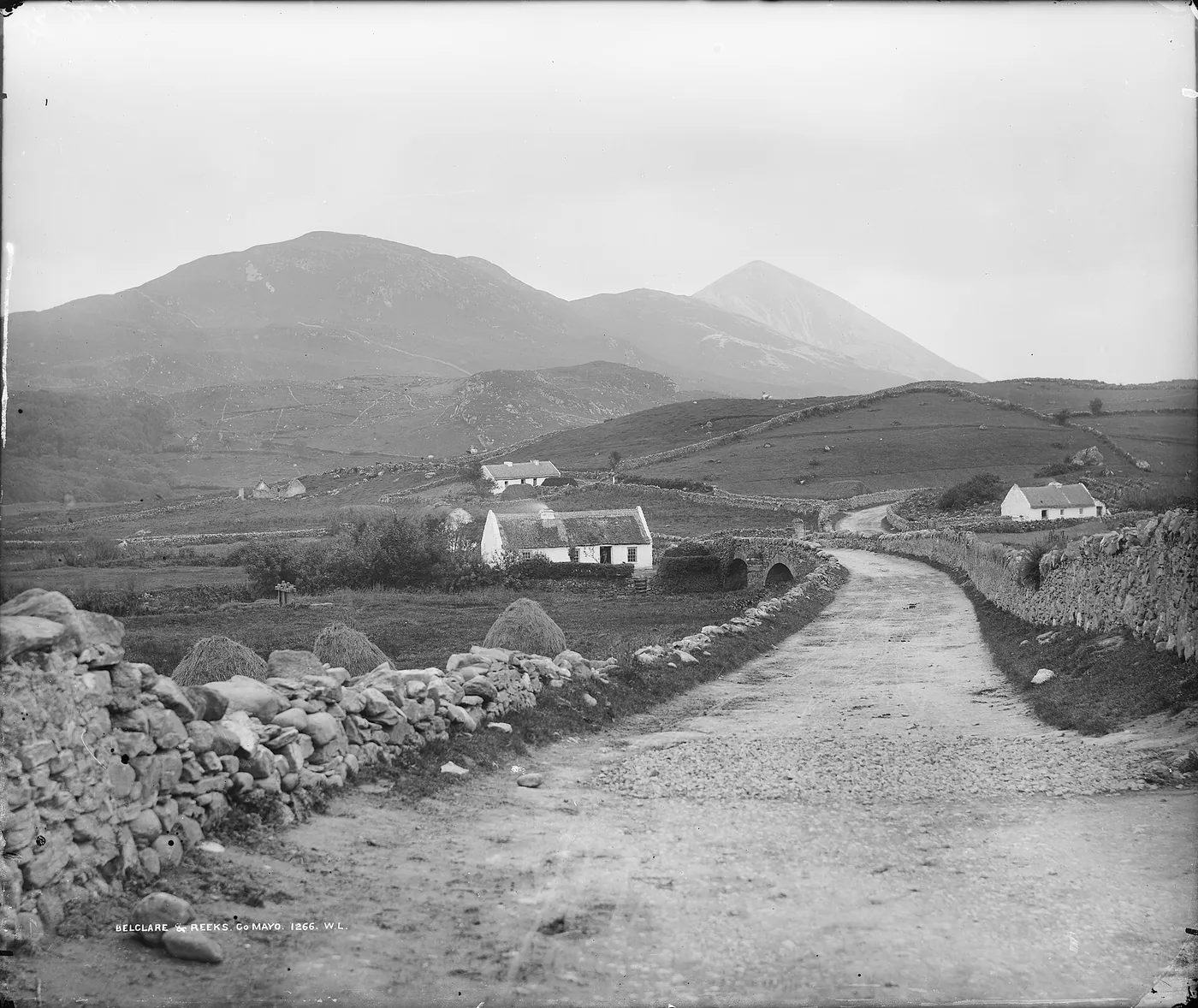
From the Tudor and Stuart plantations to the mass confiscation and redistribution after the Cromwellian conquest, ownership of Irish land passed within two centuries largely into Protestant hands, a considerable share of them resident in England and operating through agents. Land was sublet in tiers through middlemen, and the tenants at the bottom mostly held at will, with no written lease and no fixed term, subject to eviction or an increase of rent at the landlord's discretion. Value that a tenant added by draining, manuring, or building therefore did not belong to him but furnished grounds for raising the rent; parts of the north had the Ulster Custom, which recognized a saleable tenant-right and compensation for improvement, while the rest of the island did not. Rapid population growth from the later eighteenth century, together with the practice of dividing holdings among heirs, fragmented the land further, so that labourers with little or no land rented scraps of conacre and planted potatoes—the crop with the highest caloric yield per unit area and the greatest tolerance of poor ground. In 1845 the Devon Commission, reporting on the eve of the famine, had already set out how the system discouraged improvement and how precarious the tenants were. That same year the blight arrived.
Connections
Consequences1
- The Great Famine (An Gorta Mór)causesAbsentee landlords and subdivided tenancies were structural causes of the famine
Sources
- Cecil Woodham-Smith, The Great Hunger: Ireland 1845–1849
- Cormac Ó Gráda, Ireland Before and After the Famine: Explorations in Economic History, 1800–1925
- Land War / Irish Land Acts
Open questionswell attested
- The Ulster Custom (saleable tenant right and compensation for improvements) existed in parts of the north and cannot be generalized to the whole island.
- The proportion of absentee landlords and the effects of their management are debated by historians, and Ó Gráda and others have revised the traditional account.
- The causes of the famine must be examined together, including the land system, monoculture, the blight and relief policy, and should not be reduced to a single cause.
Why it matters
Attributing the Great Irish Famine to a fungus-like organism is the most typical kind of simplification in the history of technology. The blight determined which year the disaster came; the land system determined how many people had nowhere to fall back to when it did. The land system thus stands beside monoculture as a second structural cause of the famine, and a catastrophe with several causes should not be reduced to a single line of causation. It also shows that institutions are technical conditions: tenancy rules decided whether a farmer could invest in his land, investment decided cultivation practice and crop choice, and crop choice decided ecological vulnerability. Institutions do not lie outside technology; they are the space in which technology can or cannot unfold. Change any link in that chain and 1845 looks different.