From 1845 the blight Phytophthora infestans destroyed Ireland's potato crop year after year; because the poor lived almost entirely on the single "Lumper" potato, the disease became a mass famine. By 1852 about a million had died and one to two million had emigrated—a fifth to a quarter of the population lost. The blight was the trigger; monoculture, a colonial land system, and laissez-faire relief were the structural causes.
The Almighty, indeed, sent the potato blight, but the English created the famine.
—— John Mitchel, The Last Conquest of Ireland (Perhaps), 1861
History
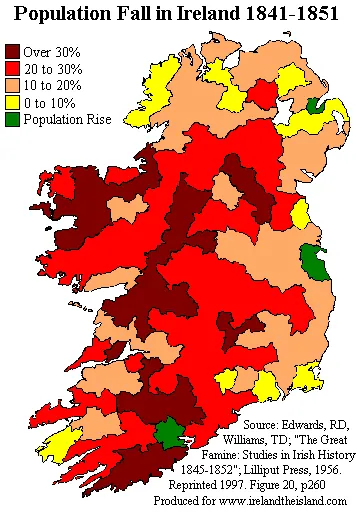
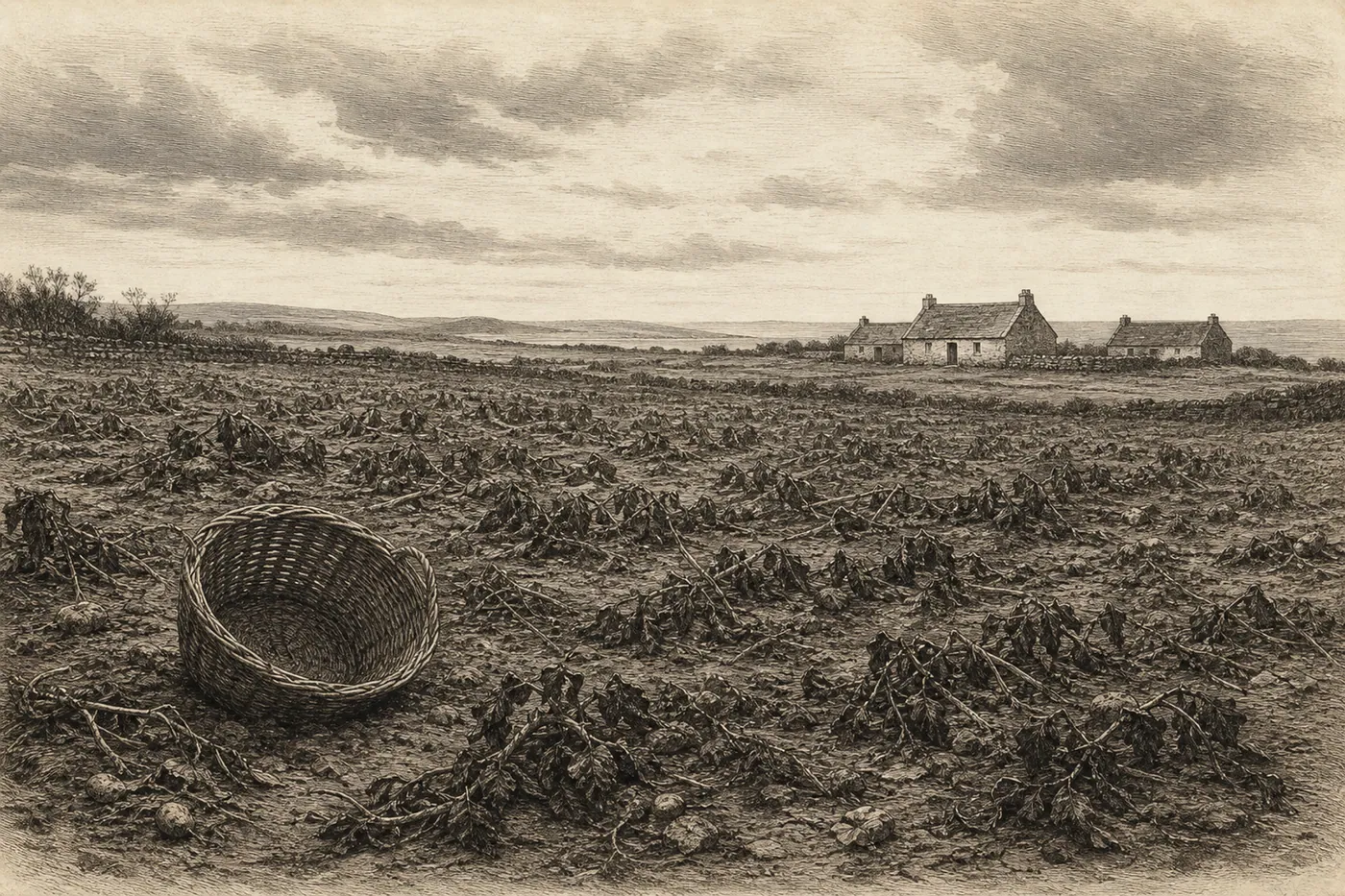
From 1845, the blight Phytophthora infestans arrived with imported potatoes and destroyed Ireland's crop for successive years. About a third of Ireland's people, above all the poor cottiers and labourers, lived almost wholly on the single, high-yielding "Lumper" potato, and this monoculture exposed a whole society to one disease. Famine followed, with "famine fevers" of typhus and dysentery. By 1852 roughly a million had died of hunger and disease, and one to two million more had fled overseas. Ireland's population fell from about 8.18 million at the 1841 census (a pre-famine peak estimated near 8.5 million in 1845) to some 6.5 million at the 1851 census, a fall of roughly a fifth against the census, or nearly a quarter against the pre-famine peak. Throughout, grain and livestock continued to be exported from Ireland; the net caloric significance of these exports is debated, but they became a focus of later reckoning. British relief was governed by laissez-faire economics and providential theology; Charles Trevelyan, Assistant Secretary to the Treasury and the official who administered it, went so far as to regard the famine as a providential check on population.
Connections
Causes2
- MonoculturecausesDependence on the single "Lumper" potato created a technical and ecological vulnerability; the blight was the immediate trigger
- The Colonial Land System (Ireland)causesAbsentee landlords and subdivided tenancies were structural causes of the famine
Consequences2
- Irish NationalisminspiresProvoked nationalism and the Fenian movement
- Transatlantic EmigrationinspiresThe famine drove mass transatlantic emigration
Sources
- Cecil Woodham-Smith, The Great Hunger
- Cormac Ó Gráda, Ireland's Great Famine
- John Mitchel, The Last Conquest of Ireland (Perhaps)
Open questionswell attested
- The figures of about one million deaths and one to two million emigrants are estimated ranges.
- The net effect of food exports during the famine is disputed.
- Historians disagree on how to characterise responsibility (a man-made catastrophe or even genocide, or a failure of policy).
- The scale of the population fall depends on the baseline: about a fifth against the 1841 census figure of about 8.18 million, and nearly a quarter against the 1845 peak of about 8.5 million.
Why it matters
To call the Great Famine an "act of God" is the label it most needs taken apart. The blight was only the trigger; the structural causes were the monoculture that bound millions to a single crop, the colonial land system of absentee landlords and subdivided tenancies, and the policy choice that subordinated relief to market doctrine. John Mitchel's line, "the Almighty sent the blight, but the English created the famine," is the sharpest expression of this "man-made" reading. Yet history also demands care: most modern historians (Woodham-Smith, Ó Gráda) condemn the folly and coldness of British policy without necessarily endorsing the charge of deliberate extermination; incompetence, dogma, and indifference are not the same as intent. The famine in turn fed Irish nationalism and the Land League, and drove the great transatlantic emigration.