The science of heat, work and the limits on turning one into the other. Sadi Carnot founded it in 1824 by asking how efficient a heat engine could be; by the 1860s Joule, Clausius and Kelvin had established energy conservation and entropy increase.
The study of these engines is of the greatest interest, their importance is enormous, their use is continually increasing, and they seem destined to produce a great revolution in the civilized world. ... their theory is very little understood, and the attempts to improve them are still directed almost by chance.
—— Sadi Carnot, Réflexions sur la puissance motrice du feu (Paris, 1824), opening pages; trans. R. H. Thurston (1890)
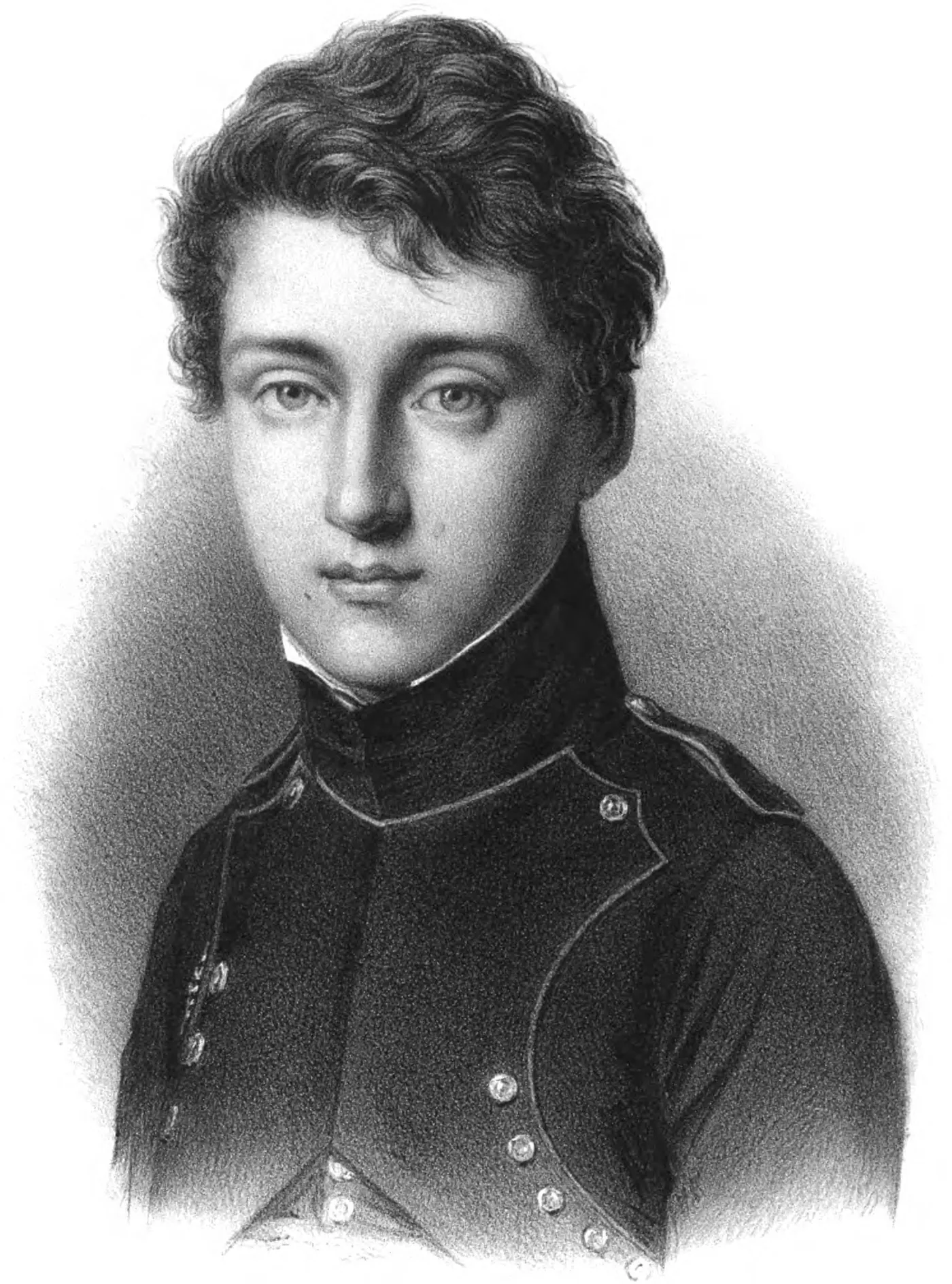
History
Thermodynamics studies the conversion of heat into work and its limits. In 1824 the French engineer Sadi Carnot published Reflections on the Motive Power of Fire, asking how much work a heat engine could yield. He still treated heat as a fluid, caloric, yet reached a conclusion that stands: an engine works by letting heat fall from a hot body to a cold one, and its maximum efficiency depends only on the two temperatures, not on whether it runs on steam or air. The book went almost unnoticed, and Carnot died of cholera in 1832, aged 36. In 1834 Émile Clapeyron restated the argument on a graph of pressure against volume, the same form as the indicator diagram Watt's firm had used in secret since 1796. In the 1840s Robert Mayer, James Joule and Hermann Helmholtz each argued that heat and work are interconvertible and their total conserved; Joule measured the mechanical equivalent of heat with falling weights that churned water. Conservation seemed to contradict Carnot, and Rudolf Clausius (1850) and William Thomson, later Lord Kelvin (1851), reconciled the two in what became the first and second laws. In 1865 Clausius coined "entropy" from the Greek for transformation and concluded that the energy of the universe is constant and its entropy tends to a maximum. In 1877 Ludwig Boltzmann tied entropy to the probability of molecular arrangements, giving the second law a statistical meaning.
Connections
Causes1
- The Steam EngineinformsCarnot founded thermodynamics by asking how efficient a heat engine could be
Echoes2
- Information TheoryechoesEntropy, from heat engines to information
- Control of FireechoesCarnot titled his book Reflections on the Motive Power of Fire: thermodynamics was a second understanding of fire
Sources
- Sadi Carnot, Réflexions sur la puissance motrice du feu (1824)
- D. S. L. Cardwell, From Watt to Clausius: The Rise of Thermodynamics in the Early Industrial Age (1971)
- Thomas S. Kuhn, Energy Conservation as an Example of Simultaneous Discovery (in Critical Problems in the History of Science, ed. M. Clagett) (1959)
- Crosbie Smith, The Science of Energy: A Cultural History of Energy Physics in Victorian Britain (1998)
Open questionswell attested
- Priority for the discovery of the conservation of energy was once disputed among Mayer, Joule, Helmholtz and others.
- Whether Sadi Carnot's late manuscripts show that he had abandoned the caloric theory is debated.
- "Science owes more to the steam engine than the steam engine owes to science" is often attributed to L. J. Henderson, but no original source has been found, so it is not used.
- The notation S = k log W is due to Planck.
Why it matters
Thermodynamics is the classic case of science learning from a machine. One might expect theory to guide practice, yet a century after Newcomen and two generations after Watt, Carnot had to admit that the theory of the steam engine was barely begun; work, efficiency, the cycle and the reversible process were all abstracted from engines. The science soon outgrew its origin. Conservation of energy entered mechanics, heat, electricity, chemistry and physiology in a single ledger, and the second law gave physics one of its few arrows of time. In 1852 Kelvin inferred a universal dissipation of mechanical energy that must one day leave the earth unfit for human habitation, an argument later stretched into the "heat death" of the universe. Statistical mechanics reinterpreted entropy, and in 1948 Claude Shannon gave the same name to his measure of uncertainty in a message; whether the two are one quantity is still argued.