The machine-breaking of English textile workers between 1811 and 1816. Nottingham stockingers, Yorkshire croppers, and Lancashire handloom weavers, writing anonymously in the name of "General Ludd" and striking by night, singled out machines used to cut wages, turn out shoddy goods, and evade the customs of the trade. The Frame Breaking Act of 1812 made machine-breaking a capital offence, and after the York trials of 1813 men were hanged or transported. What they opposed was not machinery as such but the manner of its use.
You call these men a mob… but it is the mob that labour in your fields and serve in your houses—that man your navy, and recruit your army.
—— Lord Byron, maiden speech in the House of Lords against the Frame Breaking Bill, 27 February 1812
History
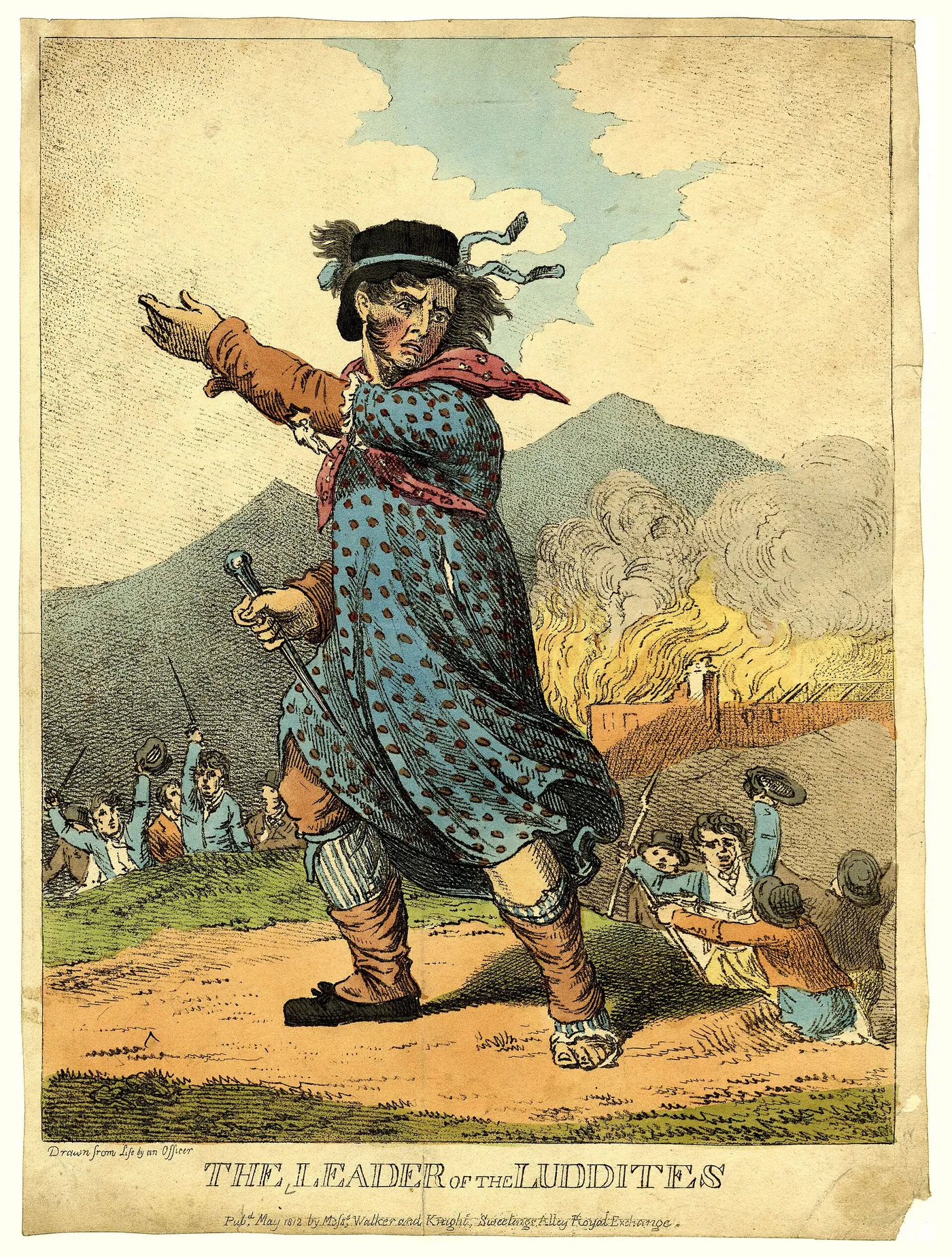
In the England of the late Napoleonic wars, prices were high, exports blocked, and wages falling. In March 1811 stockingers in Nottinghamshire began breaking wide frames—machines that produced cheap "cut-ups," stockings knitted as a sheet and then cut and sewn, which undercut prices and spoiled the trade's reputation. The movement spread to Yorkshire, where croppers, the most skilled and best-paid finishers of woollen cloth, were being displaced outright by gig mills and shearing frames, and to Lancashire, where handloom weavers faced the power loom. Actions came at night, announced by letters signed for "General Ludd," and target selection was notably disciplined: in the same workshop the customary older machines were often left untouched and only the particular frames destroyed. The government's response was severe: the Frame Breaking Act of 1812 made the offence capital, and Byron's maiden speech in the Lords against it failed to stop it. At one point more than ten thousand troops were stationed in the disturbed counties. After the York trials of 1813 a dozen or more were hanged and others transported to Australia; by 1816 the movement had largely subsided.
Connections
Causes2
- The Steam EngineinspiresMechanized power provoked the artisans' resistance
- Interchangeable PartsinspiresDeskilling as the other face of what the artisans resisted
Sources
- E. P. Thompson, The Making of the English Working Class
- Kirkpatrick Sale, Rebels Against the Future: The Luddites and Their War on the Industrial Revolution
- Luddite
Open questionswell attested
- "General Ludd" was an anonymous pseudonym, and whether Ned Ludd ever existed cannot be established.
- Grievances differed from county to county (wages and shoddy "cut-ups" in the hosiery trade, gig mills for the croppers, power looms for the handloom weavers), so they should not be lumped together.
- Equating "Luddite" with hostility to technology is a later shift of meaning, which the work of E. P. Thompson and others has corrected.
Why it matters
Today's use of "Luddite" is a specimen of semantic drift: from a concrete struggle over wages, product quality, and trade custom to a general name for opposition to technical progress. Thompson's work restored the original picture, and the breakers' selectivity is the evidence: they destroyed particular machines, not machines. The real issue was distribution and rules. When the gains of the new frames went to the masters and the costs to the displaced, while Parliament simultaneously repealed the trade's existing regulation (apprenticeship, wage-setting statutes), there was almost no other channel of appeal left. Reading this history as ignorance against progress wrongs the participants and also conceals a question still live: who bears the gains and who the costs of technical change is never settled by the technology itself.