Ibn al-Haytham (c. 965–c. 1040), Alhazen to Latin readers, was born in Basra and worked in Fatimid Cairo, where he wrote the Book of Optics and the Doubts concerning Ptolemy, making controlled testing and the critical reading of authorities part of method.
Thus the duty of the man who investigates the writings of scientists, if learning the truth is his goal, is to make himself an enemy of all that he reads, and, applying his mind to the core and margins of its content, attack it from every side. He should also suspect himself as he performs his critical examination of it, so that he may avoid falling into either prejudice or leniency.
—— Ibn al-Haytham, al-Shukūk ʿalā Baṭlamyūs (Doubts concerning Ptolemy), trans. A. I. Sabra, Harvard Magazine, Sept.–Oct. 2003
History
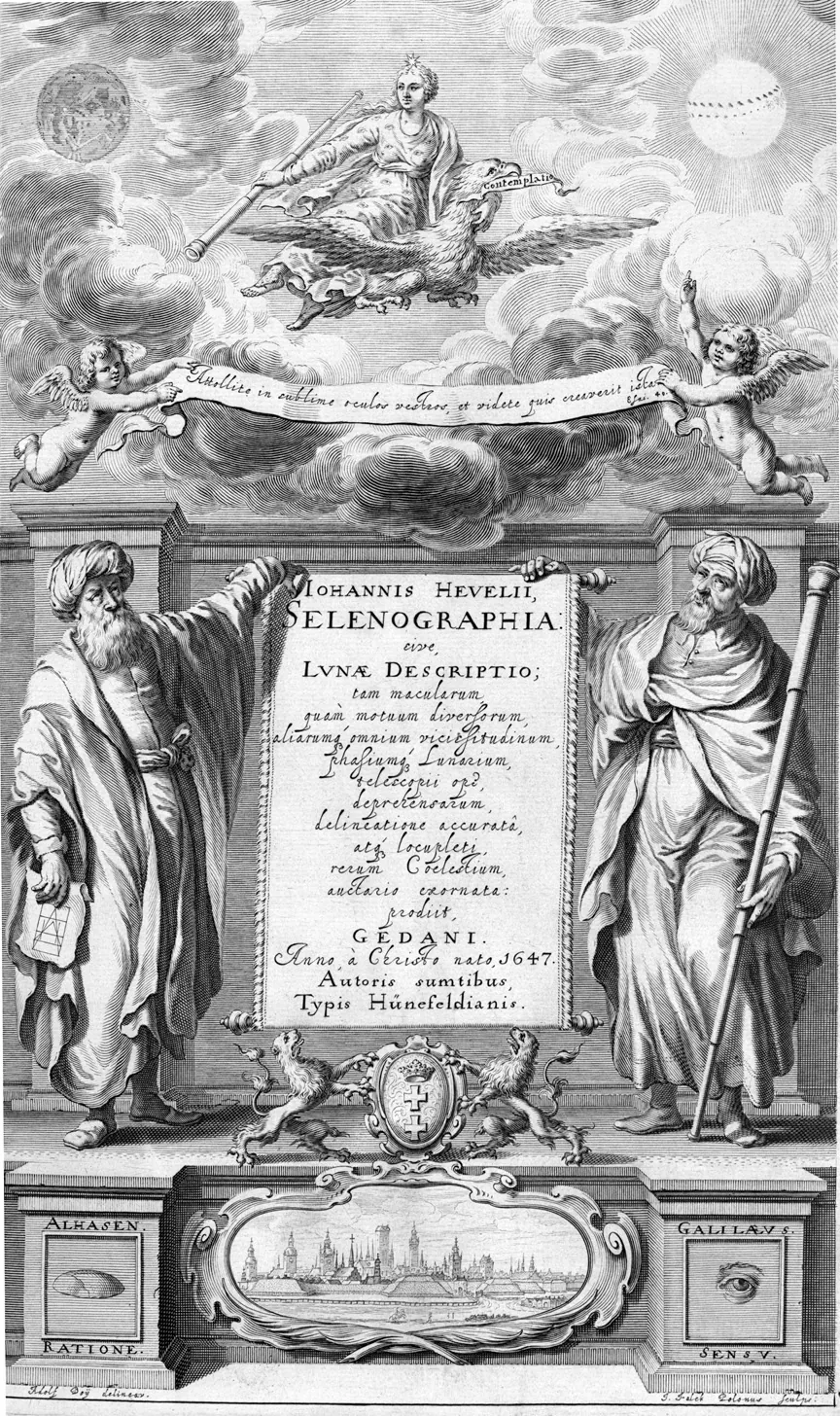
Abu Ali al-Hasan ibn al-Hasan ibn al-Haytham, Alhazen to Latin readers, was born in Basra around 965. In a short autobiography he says that as a young man he examined the doctrines of the religious sects and was finally won over by the empirical strain in Aristotle's natural philosophy and by the rigour of mathematics. He moved to Cairo under the Fatimids, reportedly lived near the Azhar mosque, and supported himself by teaching and by copying Euclid, Ptolemy and other classics. The thirteenth-century biographer al-Qifti tells how he boasted to the caliph al-Hakim that the Nile could be regulated, inspected the site south of Aswan, saw it could not be done and feigned madness until al-Hakim died in 1021; the sources disagree on the details. More than a hundred works are attributed to him, in geometry, astronomy, optics and philosophy. The seven-book Book of Optics, usually dated 1011–1021, used geometrical rays and repeatable tests, which he called i'tibar, to argue that vision arises from light entering the eye. The late Doubts concerning Ptolemy listed, point by point, where the Almagest, the Planetary Hypotheses and Ptolemy's Optics broke their own principles. The Optics was translated into Latin around 1200 as De aspectibus, read by Roger Bacon, Witelo and Kepler, and printed by Friedrich Risner at Basel in 1572 as the Opticae thesaurus, together with Witelo's optics.
Connections
Causes1
- The Ptolemaic SysteminspiresIbn al-Haytham wrote Doubts concerning Ptolemy
Consequences1
- Optics (Ibn al-Haytham)contributedThe Book of Optics (c. 1011–1021)
Sources
- A. I. Sabra (trans. and comm.), The Optics of Ibn al-Haytham, Books I–III: On Direct Vision (1989)
- Ibn al-Haytham, ed. A. I. Sabra and N. Shehaby, Al-Shukūk ʿalā Baṭlamyūs (Dubitationes in Ptolemaeum) (1971)
- David C. Lindberg, Theories of Vision from al-Kindi to Kepler (1976)
- A. I. Sabra, One Ibn al-Haytham or Two? An Exercise in Reading the Bio-Bibliographical Sources (Zeitschrift für Geschichte der Arabisch-Islamischen Wissenschaften 12) (1998)
Open questionspartly uncertain
- Ibn al-Haytham's dates of birth and death are approximate.
- The stories of his Nile flood-control scheme and his feigned madness come from thirteenth-century biographies, and the details vary between sources.
- Estimates of when the Book of Optics was written differ.
- Whether the works under his name and the autobiography belong to the same person is disputed, with Rashed and Sabra taking opposing views.
- The translator and exact date of the Latin translation are unknown.
Why it matters
Calling Ibn al-Haytham the father of the experimental method picks a forerunner by modern standards and hides the world he worked in. He attacked Ptolemy in the name of ancient principles: celestial motions should be uniform and circular, and models should correspond to real bodies. The Doubts showed that the equant broke those rules but offered nothing in its place, leaving the problem to the Maragha astronomers two centuries later. What stands out is his methodological self-awareness. He wanted disputes settled by test and demonstration, and he aimed suspicion at authorities and at the reader alike. Read in Latin for four centuries, De aspectibus became the foundation of medieval perspectiva; when Kepler explained the retinal image in 1604 he was still working inside that tradition. One question about his life remains open: Roshdi Rashed has argued that the works under his name belong to two scholars, while A. I. Sabra and others hold that there was only one.