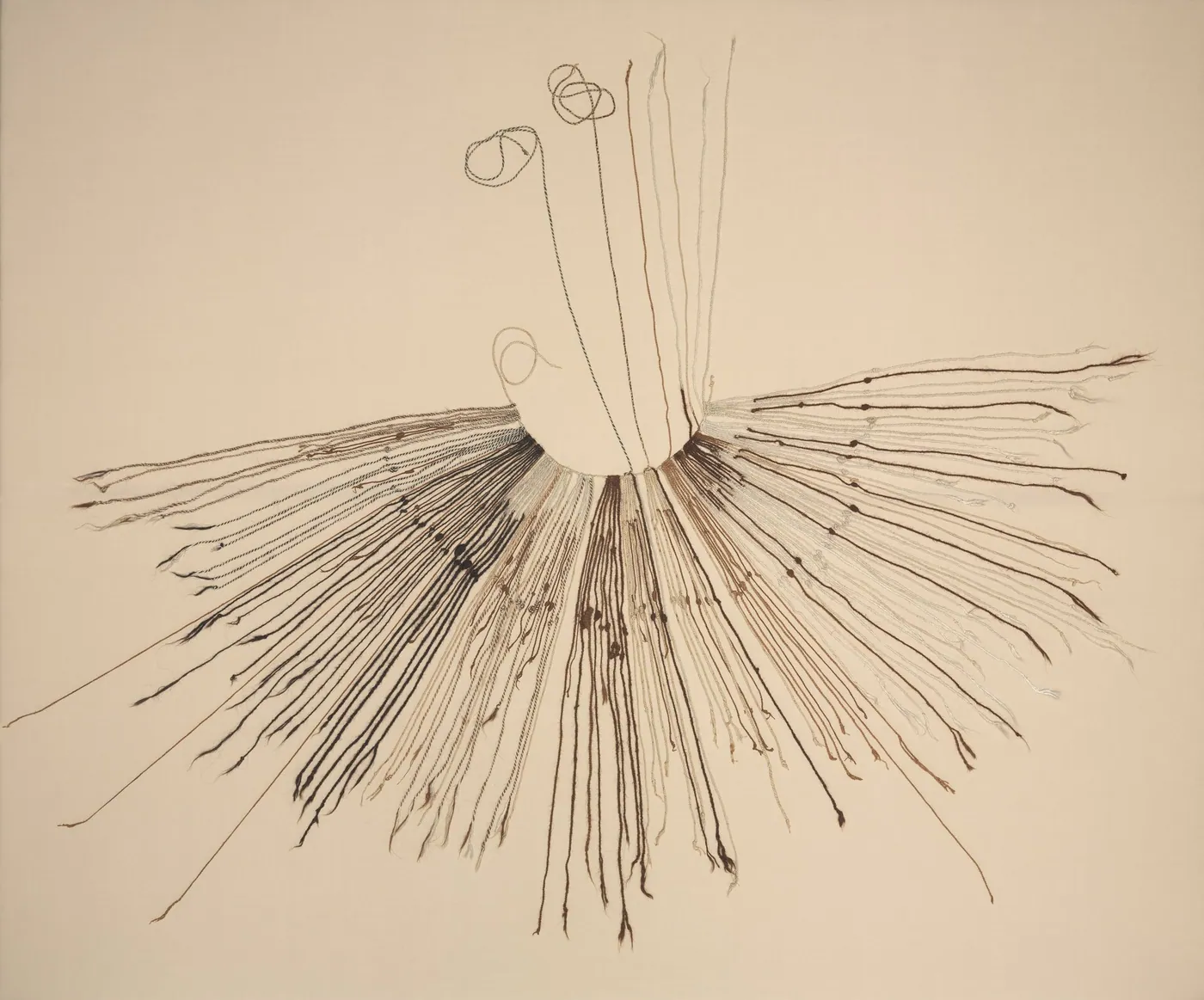
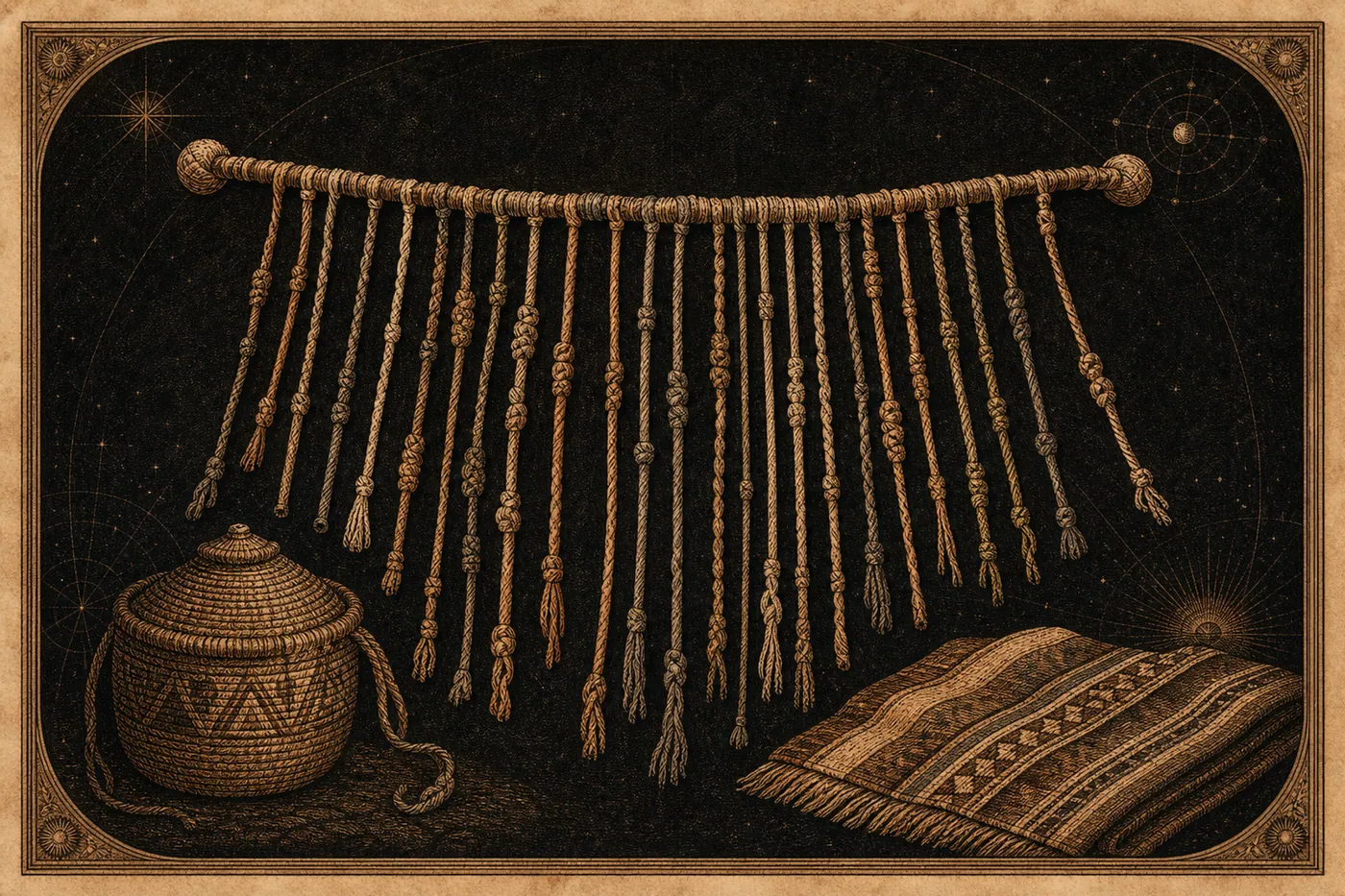
The Andean medium for recording information in knotted cords. From a primary cord hang tens to thousands of pendant cords, encoding data by knot type (single, long, figure-eight), position, colour, and ply direction. The numerical portion is securely decoded as decimal positional notation—distance from the main cord gives place value, and an empty position is zero. The Inca state ran census, tribute, and storehouses on quipu, maintained by hereditary khipukamayuq. Narrative quipu remain unread.
By these knots they counted with an exactness not inferior to our figures; and what we could not have set down, they kept by knots as well.
—— Inca Garcilaso de la Vega, Comentarios Reales de los Incas (1609)
History
A quipu consists of a primary cord with pendant cords hanging from it, which may bear subsidiaries of their own; sometimes there are more than a thousand cords in all. Information is encoded along four dimensions: knot type (a single knot for one, a long knot whose turns give two through nine, a figure-eight for a one in the units place), position along the cord (the highest place nearest the primary, descending to the units at the far end), colour (category), and ply direction (S or Z). In 1923 L. L. Locke showed the numerical portion to be decimal and positional, with an empty position standing for zero—so the Andes possessed place value without writing. The Inca state ran on it: population was registered in decimal units, tribute and labour service assessed from the rolls, and the grain and cloth in provincial storehouses accounted for, all in the keeping of hereditary khipukamayuq who cross-checked cords against oral recitation. After the conquest the colonial administration at first went on collecting taxes by quipu, then came to see the cords as instruments of idolatry and destroyed them in quantity; some thousand survive, most without excavated context.
Connections
Echoes1
- Zero and Place-Valueechoes · disputedPlace value and an empty-position zero were realized independently in the Andean quipu, with no historical connection to the Old World
Sources
- Gary Urton, Signs of the Inka Khipu: Binary Coding in the Andean Knotted-String Records
- Marcia Ascher & Robert Ascher, Code of the Quipu
- Quipu
Open questionspartly uncertain
- The numerical code (decimal place value, with an empty position for zero) is firmly established and was first worked out by L. L. Locke in 1923.
- Whether narrative or non-numerical quipus record language is still unresolved, and Gary Urton's binary-coding hypothesis is disputed.
- The spellings "quipu" and "khipu" are both in use.
- Just over a thousand quipus survive, most without archaeological context, and large numbers were destroyed in the colonial period.
Why it matters
The easiest thing to say about quipu is that it "amounted to writing," which both flatters and diminishes it. Numerically it achieved what writing systems do not always achieve—place value and zero, unambiguously; whether it recorded language remains unsettled. Treating the presence of writing as the threshold of civilization is itself a measure to be handled with care: the Andes never took the road to script, yet built an administration stretching some four thousand kilometres from north to south and registering millions, which shows that recording technology serves far more than the setting down of sentences. The other layer is its unreadability. Quipu resists decoding not only because it is complex but because the community that read it was systematically broken up; technology never depends on objects alone, but on the community that can use them. When the knowing community is broken, the object decays into a riddle.