The 16th-century religious upheaval that split Western Christianity (Luther's 95 Theses, 1517; Calvin; the English break with Rome). Propelled by the print diffusion of cheap vernacular pamphlets and Bibles, by rising literacy, and by political-economic tensions, it reshaped Europe's religion, politics, and education, and the idea of the individual as an independent reader.
Either the pope must abolish knowledge and printing, or printing must at length root him out.
—— John Foxe, Acts and Monuments (1563)
History
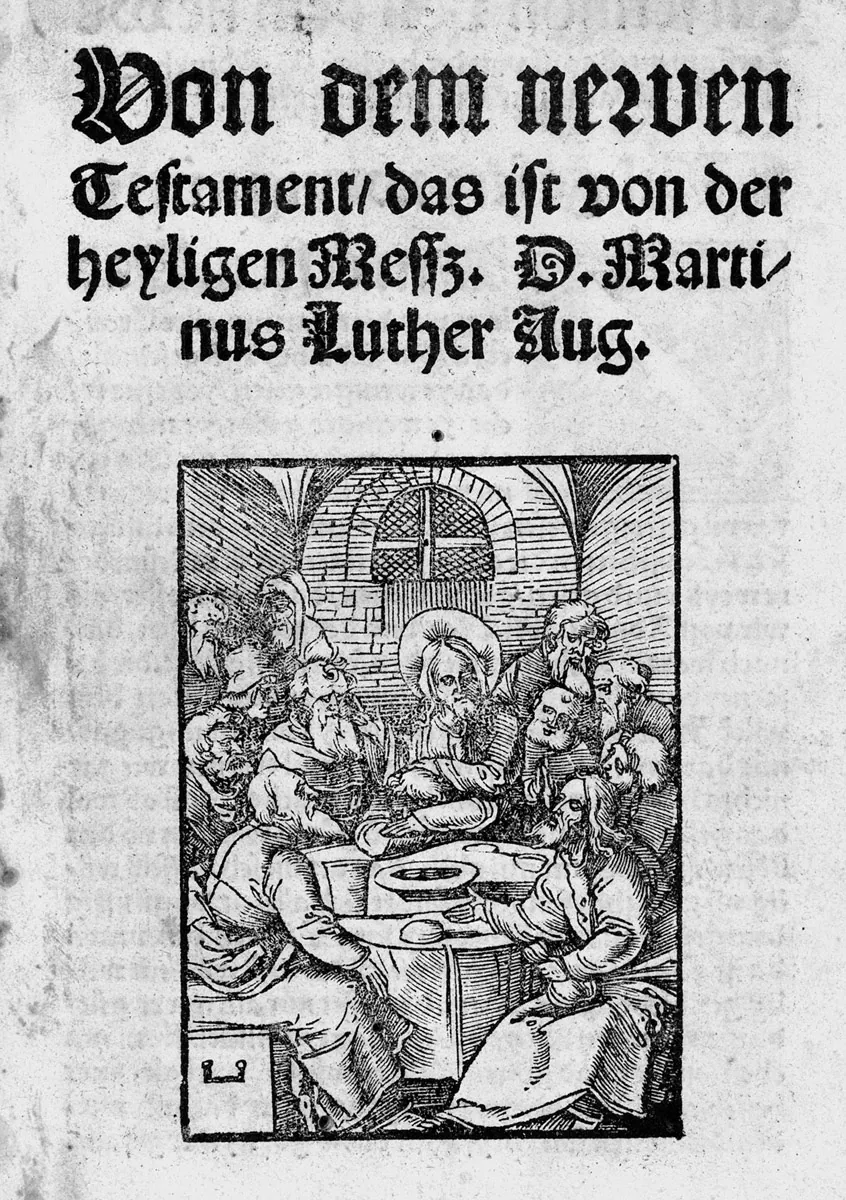
In 1517 Martin Luther, a theology professor at Wittenberg, posted (or, by one account, sent) the 95 Theses protesting the abuses of indulgences. The act was meant as an in-house scholarly disputation, yet within weeks it was translated into German, printed as pamphlets, and spread across the Holy Roman Empire—printing magnified a local quarrel into a pan-European event overnight. Luther went on to write a flood of popular vernacular pamphlets and a German Bible, plain in language and set with woodcuts, selling in astonishing numbers, and became "the first bestselling author." The reform spread from Germany: Calvin in Geneva, Zwingli in Zurich, and England's Henry VIII founding a national church for reasons of his own. Western Christianity split into Catholic and Protestant confessions, touching off religious wars, political reordering, and the spread of education (Protestantism's stress on everyone reading scripture drove literacy and mother-tongue schooling), deeply reshaping early-modern Europe.
Connections
Causes1
- The Printing Revolutionenables · disputedPrinting was a condition of the Reformation, not its sole cause
Echoes1
- The Scientific Revolutionechoes · disputedTwo early-modern upheavals of thought catalyzed by print; no causal link between them should be assumed
Sources
- Elizabeth Eisenstein, The Printing Press as an Agent of Change
- Andrew Pettegree, Brand Luther
- Reformation
Open questionspartly uncertain
- It is agreed that Luther's Ninety-five Theses of 1517 serve as the conventional starting point and that the Reformation had many causes (religious, political, economic).
- How far printing made the Reformation possible (the Eisenstein thesis) is disputed.
- Foxe's famous remark about printing and the pope expresses his anti-Catholic stance and reflects a Protestant reading of history.
Why it matters
Of all the consequences of the printing revolution, the Reformation is the one most often cited, and it is exactly here that a sense of measure must be kept: print was an enabling condition, not the sole cause. To call the Reformation "a product of printing" is a tempting technological determinism. Print was indeed the crucial amplifier—without it Luther might have been just another heretic silenced (like Hus a century before); but the deep causes of the reform were religious (indulgences, Church corruption, anxiety over salvation), political (princes against emperor and pope, the struggle over Church property), and social (the rise of a literate burgher class). Eisenstein's thesis of "printing as an agent of change" is highly illuminating, yet widely questioned for its determinist cast, and how far print enabled the Reformation remains contested. Foxe's line is sharp and partisan (from a Protestant martyrology), and shows how consciously Protestants linked print and power: they saw early that this machine was their weapon against Rome. The sound judgment is to grant the power of print while refusing to reduce an upheaval of faith, politics, and society to the achievement of one machine.