In the 1440s Gutenberg combined metal type, oil-based ink, and a screw press at Mainz; within fifty years printing reached nearly 300 European towns. Eisenstein argued its standardization and "fixity" were hidden engines of the Reformation and Scientific Revolution—yet East Asia had movable type without the same upheaval, a reminder that the "revolution" belonged to social conditions, not the machine alone.
…printing, gunpowder, and the magnet. For these three have changed the whole face and state of things throughout the world; the first in literature, the second in warfare, the third in navigation…
—— Francis Bacon, Novum Organum, I.129 (1620), trans. Spedding
History
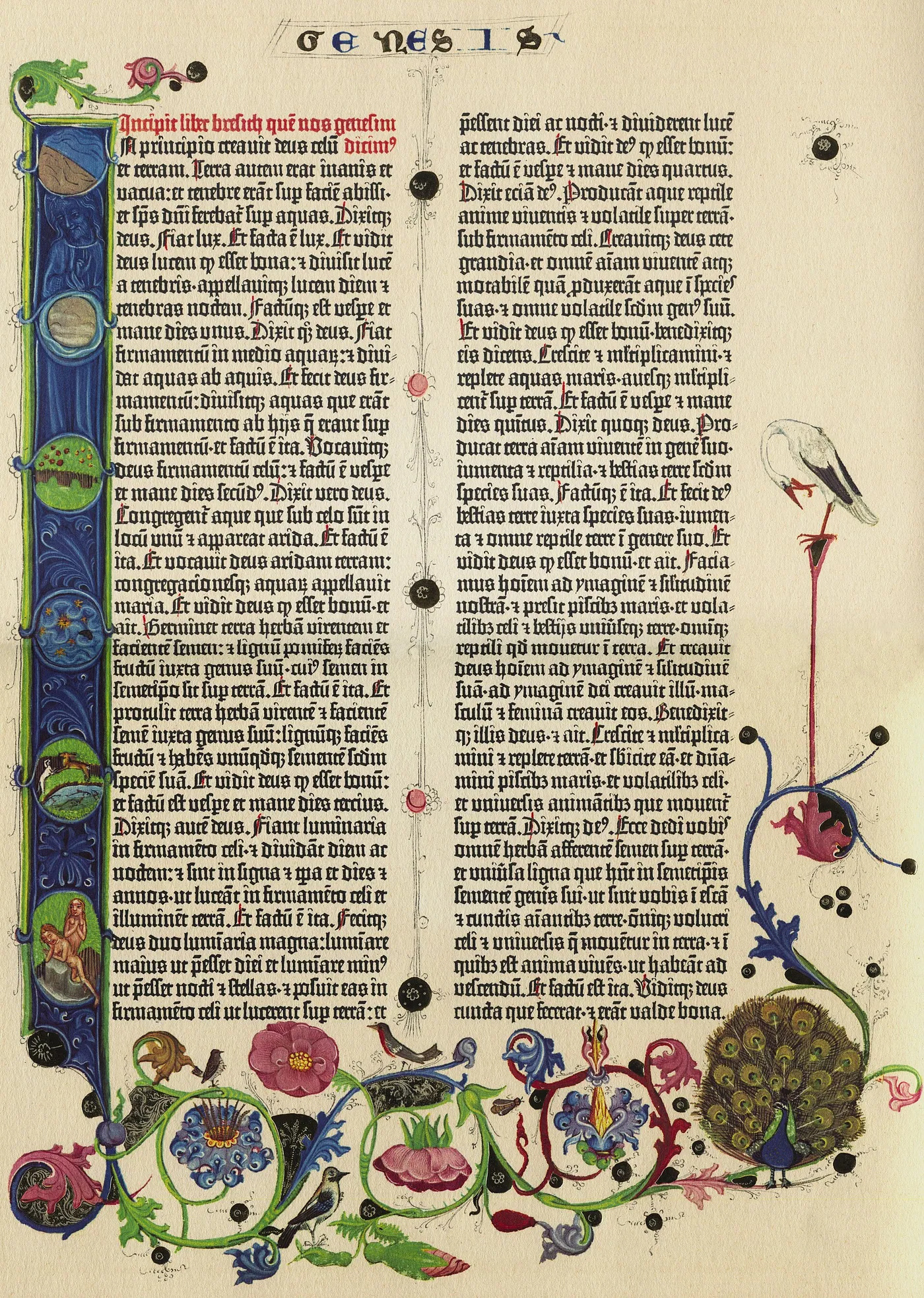
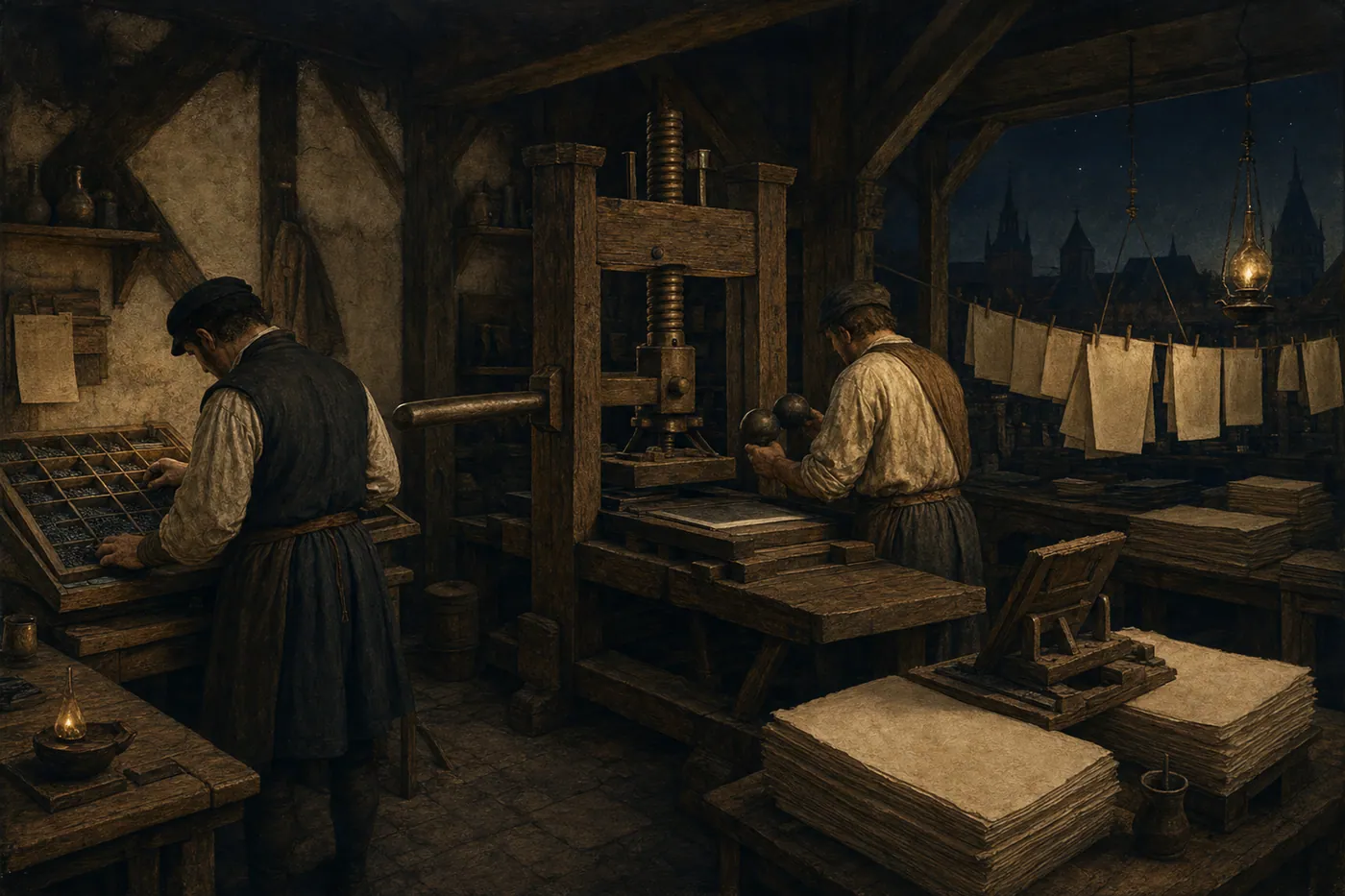
In the 1440s Johannes Gutenberg, a goldsmith of Mainz, combined metal type, oil-based ink, and a screw press adapted from the wine-and-paper press, and around 1455 printed the 42-line Bible. Unlike the clay and wooden type of East Asia, Europe's alphabetic script needed only a few dozen sorts and suited mass composition. Over the next half-century printing spread astonishingly fast: by 1500, presses operated in some 280 European towns, and the "incunabula" they produced ran to tens of thousands of editions and millions of copies. Books turned from a scribe's luxury into a commodity one could reproduce at scale; standardized texts, diagrams, and page numbers let knowledge be cited precisely, collated across distances, and preserved. The pamphlets of the Reformation, the humanist editions of the classics, the finely printed atlases of astronomy and anatomy—all rode this wind.
Connections
Causes3
- PapermakingenablesPaper, transmitted westward via the Islamic world, was a precondition of European printing
- The Gutenberg PressenablesThe material engine of the printing revolution
- The Black Deathinspires · disputedSome historians argue that the population collapse raised the cost of copying and so the demand for print
Consequences4
- The Reformationenables · disputedPrinting was a condition of the Reformation, not its sole cause
- The Scientific Revolutionenables · disputedThe standardization and wide dissemination brought by print helped drive the Scientific Revolution (the degree is debated)
- Heliocentrismenables · disputedPrinting let astronomical tables and the new theory spread widely, one of the conditions of its reception
- Double-Entry BookkeepingenablesPacioli's Summa was printed; double-entry was standardized and spread through Europe by print
Echoes1
- Movable-Type Printingechoes · disputedEast Asian and Gutenberg movable type arose independently; no influence between them should be assumed
Sources
- Elizabeth Eisenstein, The Printing Press as an Agent of Change
- Adrian Johns, The Nature of the Book
- Febvre & Martin, L'apparition du livre
Open questionswell attested
- The numbers of incunabula editions and copies are estimates (about 27,000–30,000 editions).
- The precise dates concerning Gutenberg are disputed.
- The "fixity" thesis is at the centre of a continuing debate between Eisenstein and Johns.
Why it matters
In The Printing Press as an Agent of Change (1979), Elizabeth Eisenstein argued that print's "fixity," standardization, and wide dissemination were hidden engines of the Reformation and the Scientific Revolution. But crediting the machine with everything is risky: East Asia had movable type without a comparable upheaval, which shows the protagonist of the "revolution" was not the press but the alphabet, paper, commercial capital, and competitive markets it met. Adrian Johns (The Nature of the Book, 1998) went further, countering that fixity was no innate gift of print but something built up over centuries through institutions and trust—early print teemed with piracy and error. And printing did not only illuminate: it printed indexes of forbidden books, propaganda sheets, and standardized falsehoods just as efficiently. Compared with East Asian movable type, an independent and parallel development, the European case shows that what decided the outcome was social conditions, not any single machine.