DDT's persistence and fat-solubility caused it to biomagnify up food chains, reaching extreme concentrations in apex predators such as birds of prey and thinning their eggshells to the point of reproductive failure; bald eagle, peregrine falcon, brown pelican, and osprey populations crashed. This "silent spring" is the emblematic case of the ecological cost of synthetic-insecticide technology, and it gave rise to modern environmental awareness and pesticide regulation.
The sedge is wither'd from the lake, / And no birds sing.
—— John Keats, 'La Belle Dame sans Merci'; taken by Carson as the epigraph of Silent Spring
History
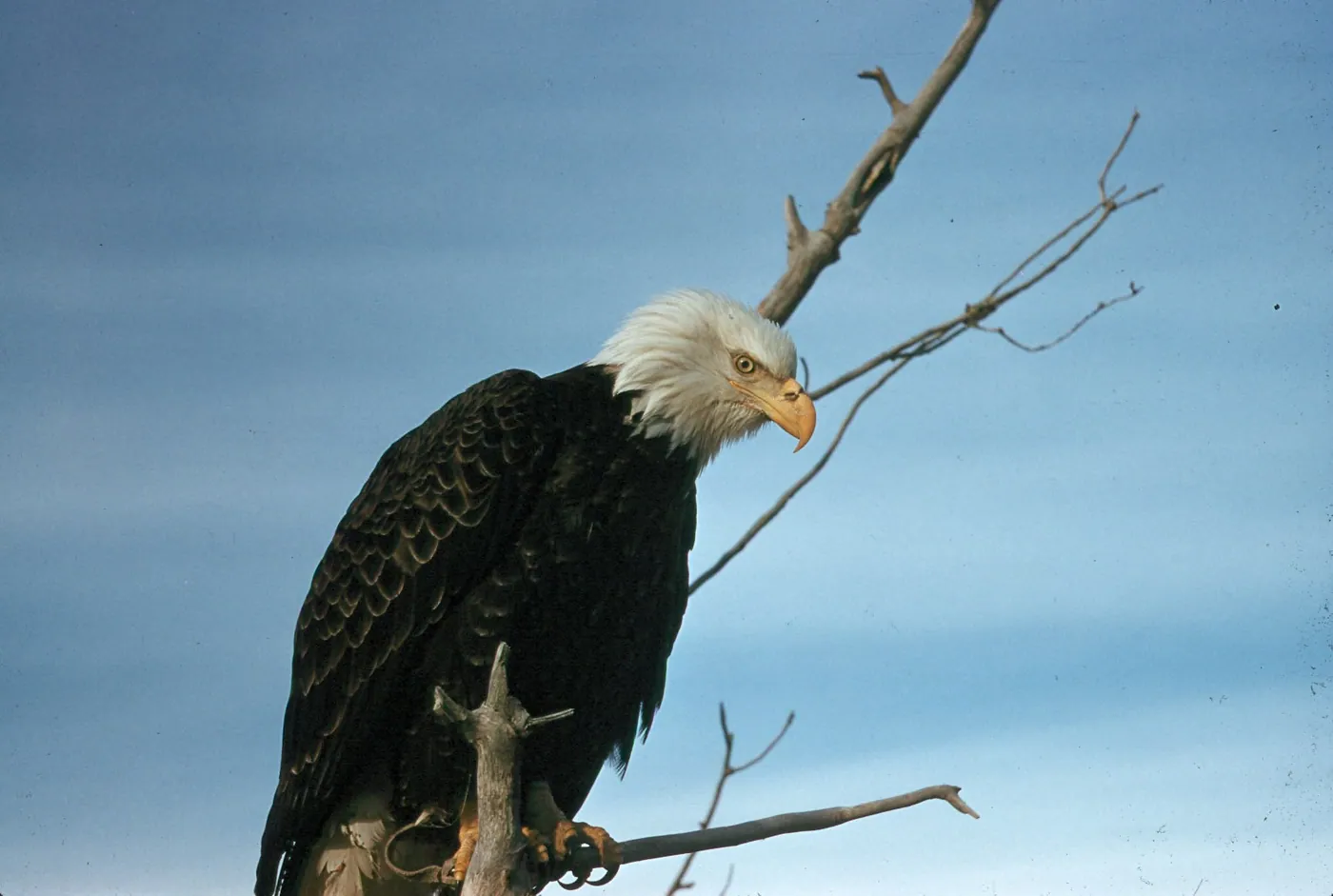
DDT resists breakdown and dissolves in fat, so instead of being excreted it accumulates in living tissue. As it moved up the food chain (plankton, insects, small fish, small birds, birds of prey), its concentration multiplied at each step, a process called biomagnification. In apex predators such as the bald eagle, peregrine falcon, brown pelican, and osprey, DDT's metabolite DDE disrupted calcium metabolism, thinning eggshells until incubating parents crushed their own eggs; reproduction collapsed, and several species approached the brink in the 1950s–60s. In 1962 Rachel Carson set this vision of a "spring without birdsong" before the public in Silent Spring. After the US banned DDT's agricultural use in 1972, these raptor populations recovered over the following decades, and the return of the bald eagle became a symbol of ecological repair.
Connections
Causes1
- DDTcausesPersistence and biomagnification triggered the ecological crisis
Consequences2
- Silent SpringinspiresThe crisis entered public view through Carson's book
- The Modern Environmental MovementinspiresThe "silent spring" became the movement's founding image
Sources
- DDT
- Rachel Carson, Silent Spring
- Eggshell thinning and DDE (peer-reviewed literature)
Open questionswell attested
- That eggshell thinning was caused by DDE, a metabolite of DDT, is the mainstream scientific consensus.
- The declines of the various species had several causes (such as habitat loss and hunting), with DDT among the main ones.
- The "health cost of banning DDT" is a separate policy controversy about DDT itself and is not part of this ecological crisis.
Why it matters
The DDT ecological crisis belongs to the history of technology, and not merely as a footnote to environmental history, because it revealed a structure few had reckoned with: the cost of a technology can be neither immediate nor local, but can surface, delayed, magnified, and far away, through the hidden conduits of an ecosystem. A farmer sprays a field, and an eagle falls at the top of a food chain hundreds of kilometers away. That "invisible chain of causation" was itself an epistemic leap in 20th-century ecology and toxicology, expanding "pollution" from the visible black smoke at a chimney's mouth to an invisible debt seeping through the whole web of life. Through Silent Spring the crisis reached the public, and the environmental movement and pesticide regulation followed; the cost had to be seen before it could be corrected.