The long processes by which humans turned certain wild plants and animals into objects of controlled production. It was not one invention but at least seven transitions out of contact with one another: wheat and barley in the Fertile Crescent from about 9500 BCE; millet in north China and rice along the Yangtze from about 8000 BCE; maize and squash in Mesoamerica from about 7000 BCE; taro and banana in the New Guinea highlands; potato and quinoa in the Andes; sorghum and yam in West Africa. Farming brought sedentism, surplus, storage, accounting, and the state; it also brought infectious disease, drudgery, worse nutrition, and a lasting dependence on a handful of crops.
The adoption of agriculture, supposedly our most decisive step toward a better life, was in many ways a catastrophe from which we have never recovered.
—— Jared Diamond, "The Worst Mistake in the History of the Human Race," Discover (1987)
History
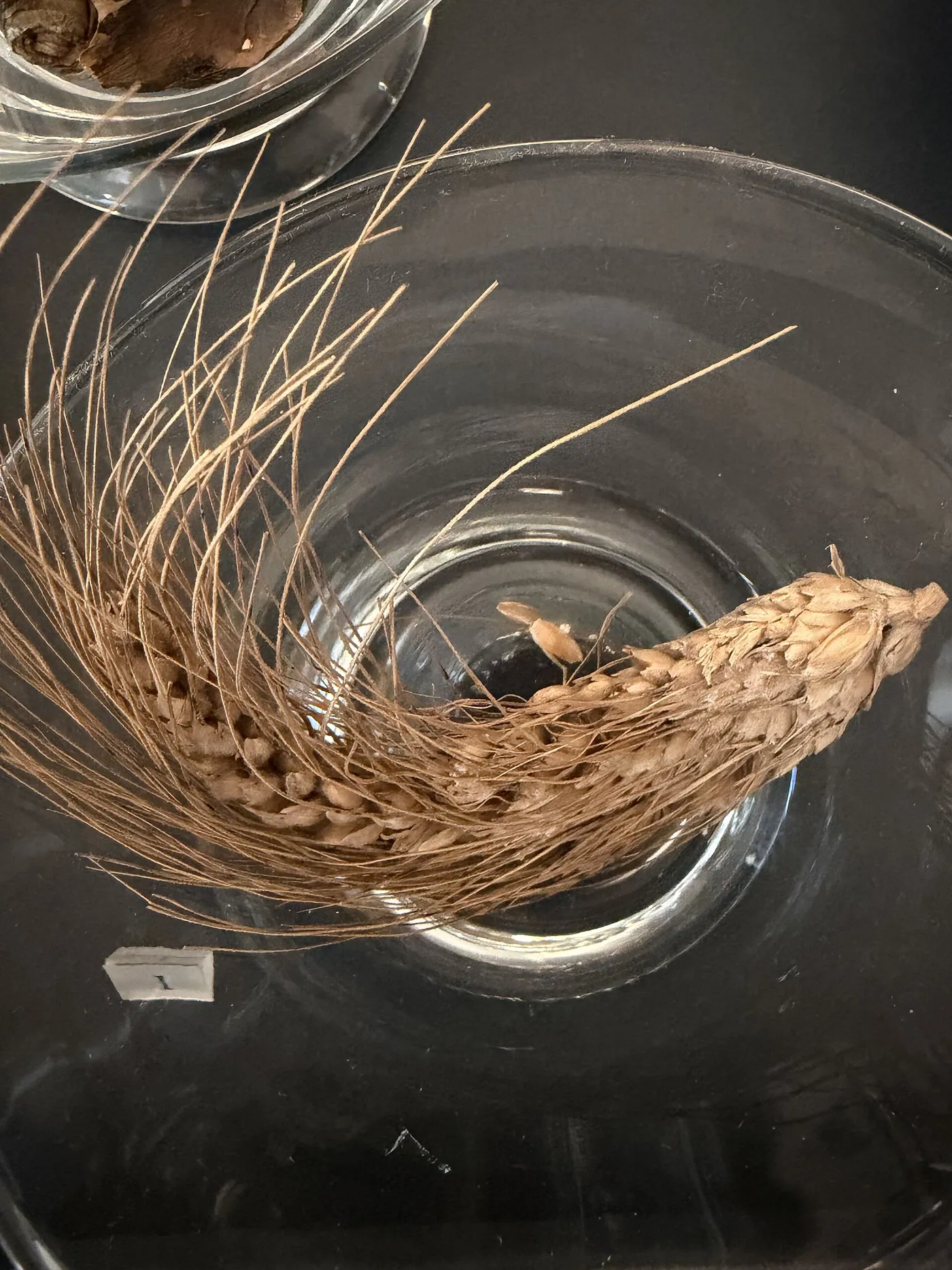
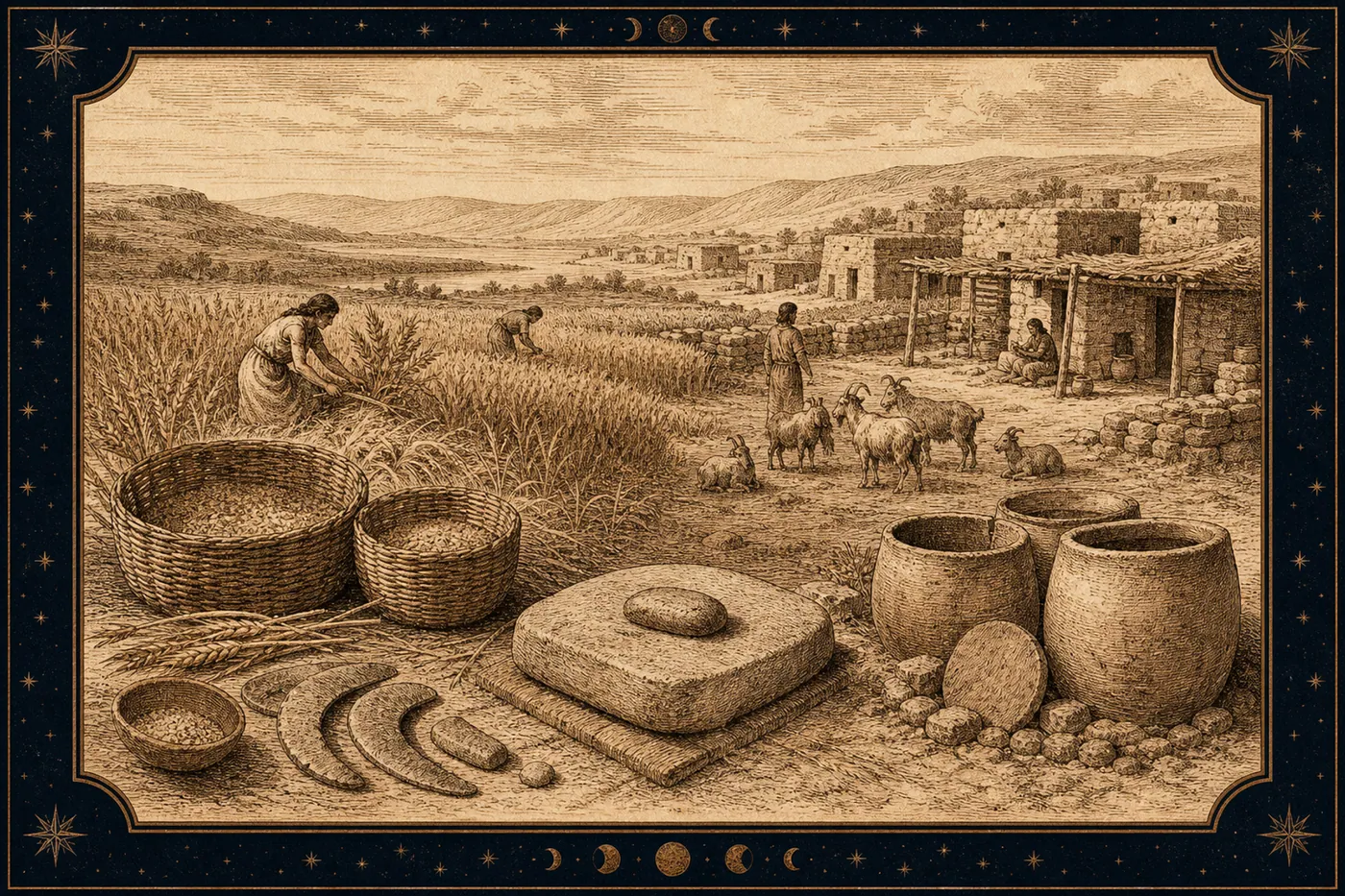
In the ten millennia after the last glaciation, at least seven regions out of contact with one another took the same road. In the Fertile Crescent, morphologically domesticated einkorn, emmer, and barley appear from about 9500 BCE, followed by sheep, goat, pig, and cattle. In north China millet was sown by about 8000 BCE, and rice was domesticated along the middle and lower Yangtze in the same period. In Mesoamerica maize was bred out of teosinte from about 7000 BCE, alongside squash and beans. The New Guinea highlands had taro and banana, the Andes potato and quinoa, West Africa sorghum and yam, each on its own chronology. None of these transitions was quick: a thousand years or more commonly separates intensive gathering of wild grasses from a visible change in the seed itself—a rachis that no longer shatters, larger grains. Settlement followed, storage followed, and so did the marks used to count what was stored: the clay tokens and cuneiform of Mesopotamia first recorded grain and livestock. Skeletal evidence shows the other side: compared with the foragers before them, early farmers were shorter, had more caries and deficiency disease, and suffered epidemics that came of living close to animals and to each other.
Connections
Causes1
- Stone ToolsenablesGround-stone axes, sickle blades and grinding stones made clearing, reaping and processing grain possible
Consequences3
- Cuneiformenables · disputedSurplus and storage called forth marks for counting, a scholarly commonplace rather than a strict causal claim
- MonocultureenablesAgriculture is the distant root of monoculture: domesticable species are few, and intensification narrows the crop repertoire
- Natural SelectioninspiresDarwin argued from breeders' artificial selection to natural selection
Echoes1
- PotteryechoesIn East Asia pottery preceded farming by some ten thousand years: containers were not a by-product of agriculture
Sources
- James C. Scott, Against the Grain: A Deep History of the Earliest States
- 贾雷德·戴蒙德(Jared Diamond,1987), 《人类史上最严重的错误》
- David Graeber and David Wengrow, The Dawn of Everything: A New History of Humanity
- Neolithic Revolution
Open questionswell attested
- The dates for each centre of origin are archaeological range estimates that are often revised after new excavations; "at least seven independent origins" is the current mainstream count, not a settled conclusion.
- Domestication was a gradual process lasting hundreds to thousands of years, and the term "revolution" (Childe, 1930s) is a historians' construct that people at the time could not have perceived.
- Diamond's "worst mistake" thesis has a solid palaeopathological basis (early farmers grew shorter and suffered more tooth decay and infectious disease), but describing a drift over a thousand years as a single "choice" verges on teleology.
- Graeber and Wengrow point out that many groups moved back and forth between farming and foraging for long periods instead of climbing a one-way ladder.
- "Surplus gave rise to writing" is the consensus view, but the causation is not strict, so the link between surplus and writing is disputed.
Why it matters
Diamond called agriculture "the worst mistake in the history of the human race," and the palaeopathology is on his side: early farmers were shorter, sicker, and worked harder than their ancestors. Yet the phrase smuggles in the assumption it means to attack—it treats a drift of a thousand years as a choice that could be got right or wrong. No generation could see the account a millennium out. What each generation did was sow a little more than the last and guard a little more ground; population rose accordingly, and the way back closed behind it. This is the most characteristic form of causation in the history of technology: no one chose agriculture; agriculture selected for ever more people who depended on it. Graeber and Wengrow's caution matters as much: many groups moved back and forth between farming and foraging for thousands of years and climbed no staircase at all. The "Neolithic Revolution" is a line drawn in hindsight; those who lived through it walked no such line.