A writing material made from the pith of the Nile papyrus sedge, pressed into sheets—the dominant writing surface of the ancient Mediterranean for some three thousand years. Egypt held a near-monopoly on its manufacture and export; the scrolls of the Library of Alexandria were papyrus. It was gradually displaced by parchment and then by paper. It was the material substrate on which classical civilization set down its words.
…our civilization, or at any rate our records, depend very largely on the use of papyrus.
—— Pliny the Elder, Natural History 13
History
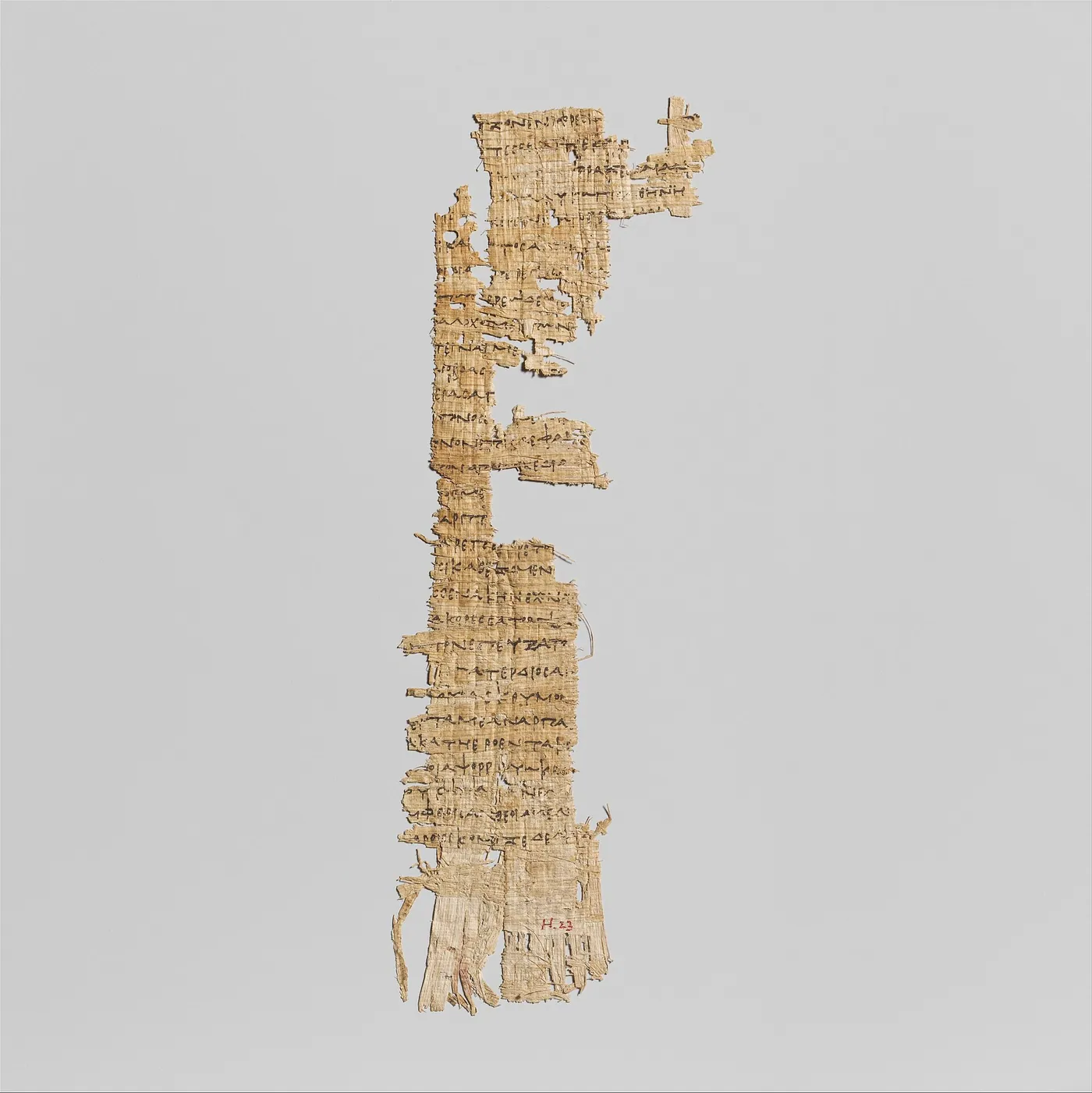
Papyrus was taken from the sedge that grew abundantly in the Nile Delta. Workers cut the pith into thin strips, laid them crosswise, pressed and beat them until their own sap bonded them into a sheet, then glued sheets into a long scroll. From ancient Egypt onward papyrus was the chief writing material, traded across the whole Mediterranean: Greek philosophy, Roman decrees, and the hundred thousand scrolls of the Library of Alexandria were mostly written on it. Egypt's near-monopoly made papyrus a strategic export. Around the 2nd century BCE, Pergamon is said to have improved parchment in response to a papyrus embargo—the first "supply squeeze" over a writing material. Parchment then gained ground in Europe, and from the 8th century paper from the East overtook both, and papyrus passed from history (al-Thaʿālibī records that Samarkand paper "drove out the papyrus of Egypt").
Connections
Consequences1
- The Library of AlexandriaenablesThe Library's scrolls were papyrus; Egyptian papyrus was its material precondition
Echoes1
- PapermakingechoesTwo independently originated writing materials; paper finally displaced papyrus
Sources
- Justin Pollard & Howard Reid, The Rise and Fall of Alexandria
- Naphtali Lewis, Papyrus
- Papyrus
Open questionswell attested
- It is well established that papyrus was the main writing material of the ancient Mediterranean and was produced mainly in Egypt.
- How far Egypt's export monopoly amounted to a "papyrus curtain" is debated by scholars.
- The time at which paper replaced papyrus varied from place to place, coming earlier in the Islamic world.
Why it matters
Histories of writing often record what was written but forget to ask what it was written on. Papyrus reminds us that the substrate is a technology too—and that where a substrate is made, and who supplies it, shapes the geography of knowledge. Egypt's near-monopoly tied Mediterranean literacy, materially, to a single river; the tale of Pergamon forced into parchment is one of the oldest versions of the anxiety over "technological self-reliance." Papyrus's end shows that writing materials adapt to local supply and turn over by generations, papyrus yielding to parchment and then to paper, as in a relay. The Library of Alexandria, too, presupposed this material: its hundred thousand scrolls required a cheap and plentiful scroll-stock.