The systematic, self-correcting procedure of inquiry combining hypothesis, controlled observation/experiment, and inductive–deductive reasoning, which took shape in early-modern Europe (Bacon's induction, Galileo's mathematized experiment, Descartes' method), building on medieval Islamic (Ibn al-Haytham's experimental optics) and Scholastic precedents. It was not any one person's single invention but a gradually consolidating set of norms.
Man, being the servant and interpreter of Nature, can do and understand so much and so much only as he has observed in fact or in thought of the course of Nature; beyond this he neither knows anything nor can do anything.
—— Francis Bacon, Novum Organum, Aphorism I (1620)
History
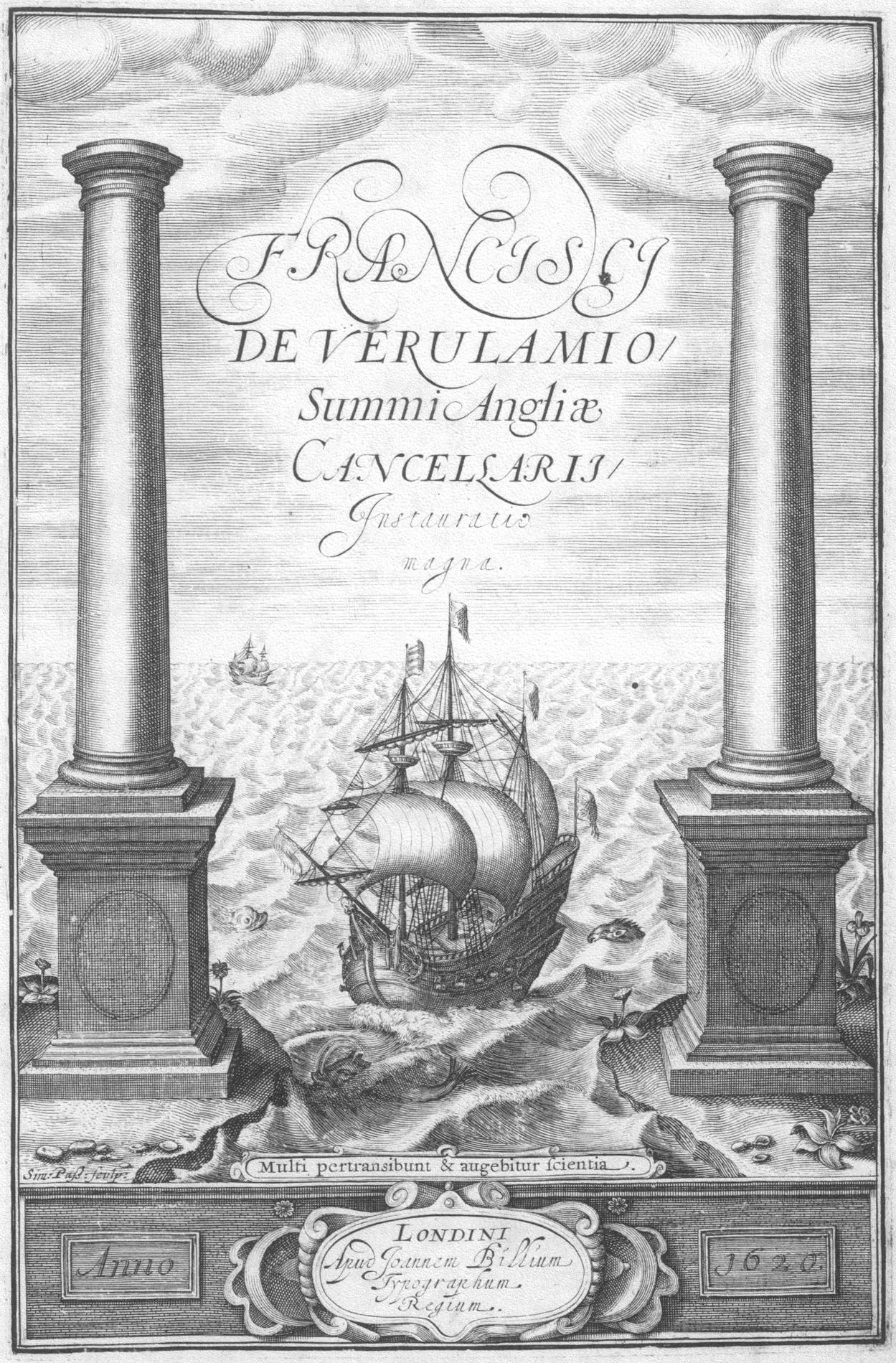
In the early-modern period Europe gradually consolidated a new set of norms for inquiring into nature. Francis Bacon, in the Novum Organum (1620), urged systematic observation and induction in place of the sovereignty of Aristotelian deduction, and stressed "putting nature to the question" by experiment; Galileo joined mathematics to controlled experiment, testing hypotheses with inclined planes, pendulums, and the telescope, and modelled a path of measure–infer–verify; Descartes pressed the way of deduction and doubt. Different in stance, together they set appeal to empirical evidence, repeatable testing, and openness to refutation as the standard of knowledge. These norms did not come from nowhere: they built on the already quite self-conscious experimental approach of the medieval Islamic scholar Ibn al-Haytham in optics, and on the long Scholastic training in argument and causation. By the later 17th century, institutions such as the Royal Society made the method communal—turning it from a private intellectual claim into a shared, inheritable norm.
Connections
Causes3
- Optics (Ibn al-Haytham)inspiresIbn al-Haytham's experimental-mathematical Optics was a forerunner of the modern scientific method
- Euclid's Elementsenables · disputedThe axiomatic-deductive form is one formal source of the modern scientific method (the degree is contested)
- Francis BaconcontributedThe Novum Organum (1620) called for rebuilding knowledge through induction and experiment
Consequences1
- The Scientific Revolutionenables · disputedMethod drove the Scientific Revolution (whether as its core or its product is a matter of interpretation)
Sources
- Francis Bacon, Novum Organum
- David Wootton, The Invention of Science
- Scientific method
Open questionspartly uncertain
- That the scientific method took shape in early modern Europe is the mainstream narrative.
- Whether a single "scientific method" exists is philosophically contested (by Feyerabend and others).
- That Islamic scholars (Ibn al-Haytham) and scholasticism anticipated the method is the scholarly consensus, though their weight is debated.
Why it matters
On the scientific method, two myths most need dispelling. The first is the myth of "the one method": as if a fixed set of universal steps existed, which one need only follow to produce science. The philosophy of science (Popper's falsifiability, Kuhn's paradigms, down to Feyerabend's provocation that "anything goes") has long shown that real science is far messier and more plural than any textbook flowchart, so that the method is better understood as a gradually consolidating, still-contested set of norms than as an operating manual. The second is the myth of "European originality": casting the scientific method as the Renaissance's genius from nothing, erasing Ibn al-Haytham's experimental optics, the Scholastic training in causation, and earlier precursors. How far Ibn al-Haytham's optics inspired the later method is still argued, but that non-European lineage deserves to be recorded with due weight. The heart of method may lie not in any specific procedure but in a counterintuitive discipline of self-doubt: the institutionalizing of "I might be wrong."